
Guide
How to play Doom II: Hell on Earth
Where to buy


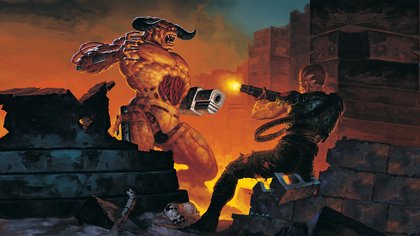
Doom II: Hell on Earth arrived as the direct sequel to the 1993 classic Doom. The story picks up the demonic invasion, but now the action moves to Earth, which has been overrun by creatures from Hell that pour out of portals opened by military research. The setting mixes industrial corridors, ruined cities and desolate landscapes with a dark science fiction look. It differs from the original mainly in its greater variety of enemies, the addition of the Super Shotgun, and longer, more linear levels that make the campaign feel like a global fight against infernal chaos.
It is a fast-paced first-person shooter where you move through maze-like maps, facing hordes of demons while you hunt for weapons, ammo and health. The core mechanics revolve around fluid movement, constant shooting and managing limited resources. You move and fire with the keyboard, with the option of using a mouse or a joystick to aim, and you can switch between different weapons, from the starting pistol to the powerful Super Shotgun and the Rocket Launcher.

When you start a game, the best move is to get used to the controls and explore the first level without rushing into fights. Pick up everything you find: ammo, medikits and armor, since supplies are not plentiful and enemies can show up in groups. During the first hour, keep moving, avoid staying in one area for too long, and use the pistol or the basic shotgun to take out minor threats while you look for the Super Shotgun, which is usually hidden in secret areas. Learning to balance your health and armor helps you survive the toughest encounters.
To make steady progress, you need to understand several key systems in the game. The first is ammo management: each weapon has its own type of ammo, and scarcity forces you to switch weapons depending on the situation. The second is the use of keys and switches, which unlock doors and secret areas that hold valuable resources. Enemy behavior also varies: some are vulnerable to close-range fire, while others call for explosives or area attacks. Recognizing the movement patterns of the demons lets you anticipate their attacks and plan escape or flanking routes.

Beginners tend to make mistakes that cut their playtime short. One of the most common is standing still and firing without moving, which makes you an easy target for enemies that can surround you. Another frequent mistake is burning through the ammo for powerful weapons before finding refills, which leaves you with no options against tougher enemies. It is also common to miss secret doors or hidden items, which costs you resources that could make a difference in later levels. Avoiding these errors means always staying on the move, saving ammo for critical moments, and exploring every corner of the map.
To advance more efficiently, it helps to adopt a "push forward and fall back" strategy. When you reach an area with few resources, it is better to retreat and look for an alternate route that offers more medikits or ammo before you face stronger enemies. The Super Shotgun, though powerful, uses a lot of ammo, so save it for large enemies like the Mancubus or for moments when you need to break through quickly. Using the Rocket Launcher against groups of enemies or bosses can save time, but it is also costly, so pairing it with rapid-fire weapons lets you keep up the pressure without running out of explosives.

Doom II: Hell on Earth suits players who enjoy frantic action, exploring maze-like environments and the challenge of managing resources under pressure. If you appreciate the classics of the shooter genre, the retro look of the nineties and the feeling of power that comes with a wide variety of weapons, you will find Hell on Earth rewarding. It is also a good fit if you want a game that, despite its age, still offers solid, demanding gameplay that tests your reflexes and your ability to adapt.
Doom II: Hell on Earth came out on 30 de septiembre de 1994. Platforms, genres and ratings are on the Doom II: Hell on Earth game page.
Related games




Last updated: 24 de noviembre de 2026.
Powered by PairProgramming · custom software development, AI and automation.