


Guide
How to play Half-Life
Where to buy


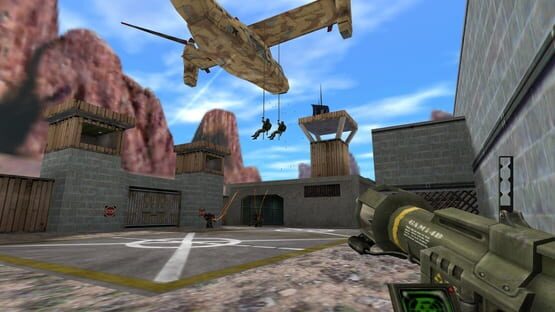
Released in 1998, Half-Life is a first-person shooter set in the Black Mesa research facility. The story follows Gordon Freeman, a theoretical physicist who must escape the complex after a failed science experiment triggers an alien invasion. What sets it apart from other games of its time is its focus on seamless storytelling: instead of pausing the action for cutscenes, the story unfolds through scripted events that happen while the player stays in control, creating a continuous and gripping experience.
Gameplay mixes firefights, detailed exploration of the environment, and puzzle solving. A typical session involves moving through the game's interconnected chapters, facing enemies, looking for alternate routes, and using the environment to get past obstacles. Core mechanics include a varied arsenal that ranges from conventional firearms to alien technology, interacting with machinery and objects to solve puzzles, and coordinating movement and positioning to survive encounters. Ammo and resources are woven naturally into the world, which adds to the sense of realism.

When you start, it's essential to get familiar with the controls and interface, since the game doesn't stop the action to offer lengthy explanations. During the first hour, pay close attention to your surroundings. Clues for puzzles and the locations of resources are usually built into the level logically. There is no explicit tutorial, so observation and experimentation are key to understanding the basic mechanics and how the world reacts to your actions.
To progress, it helps to understand that the game isn't divided into discrete levels but into chapters that form one continuous progression. Key systems include strategic weapon management, since each gun has a specific tactical role; manipulating the environment to solve puzzles, such as moving crates or activating mechanisms; and interacting with non-player characters, like security guards or scientists, who may offer help or information. Combat requires more than just shooting: positioning and awareness of your surroundings are crucial.

A common mistake among beginners is trying to push forward on firepower alone. Many encounters call for a more tactical approach. Another mistake is not exploring thoroughly, which can lead to missing vital resources or puzzle solutions. Ignoring non-player characters is also common, even though they often provide clues or assistance. To avoid these pitfalls, adopt an exploratory mindset, use the environment to your advantage, and listen to the characters you meet.
To get ahead, watch enemy behavior closely, since the various alien species and human opponents have different attack patterns and tactical responses. Using environmental hazards against enemies, such as steam or explosives, can be an effective strategy. Also, don't hesitate to backtrack and look for alternate routes if a path seems blocked, since puzzle solving often means finding clever ways around obstacles.

If you enjoy an intense, continuous experience where the narrative blends with the action without interruption, this one is for you. Players who appreciate the mix of first-person shooting, puzzle solving, and exploring detailed environments will find a very rewarding game here. It's a great fit for anyone looking for a tactical challenge and a story that unfolds through direct interaction with the game world.
Half-Life came out on 19 de noviembre de 1998. Platforms, genres and ratings are on the Half-Life game page.
Related games


Last updated: 6 de noviembre de 2026.
Powered by PairProgramming · custom software development, AI and automation.