
Guide
How to play Half-Life 2: Lost Coast
Where to buy


Half-Life 2: Lost Coast is a short side story in the series, released in 2005 as a technology demo for the Source engine. The story picks up with scientist Gordon Freeman after the events of Half-Life 2, placing him on a coastline in a world ruled by the Combine. The setting mixes rocky cliffs, beaches, and industrial structures, creating a mood that blends the bleakness typical of the franchise with the feeling of being in an open, natural environment. What sets this expansion apart from the main game is its focus on HDR lighting and cutting-edge visual effects for its time, which let you see how light and shadow interact with materials and fog, delivering a visually striking experience.
The gameplay follows the first-person action style that defines Half-Life, with an emphasis on exploration, puzzle solving, and combat against enemies controlled by AI. A typical session involves moving through linear areas while collecting weapons and items, activating mechanisms, and facing enemies that can be either human or alien creatures. The core mechanics include using the Gravity Gun to manipulate objects, managing resources such as ammo and health, and interacting with the environment through levers, buttons, and moving platforms. The pacing alternates between tense moments in intense firefights and calmer sections where you need to study the surroundings to find your way forward.
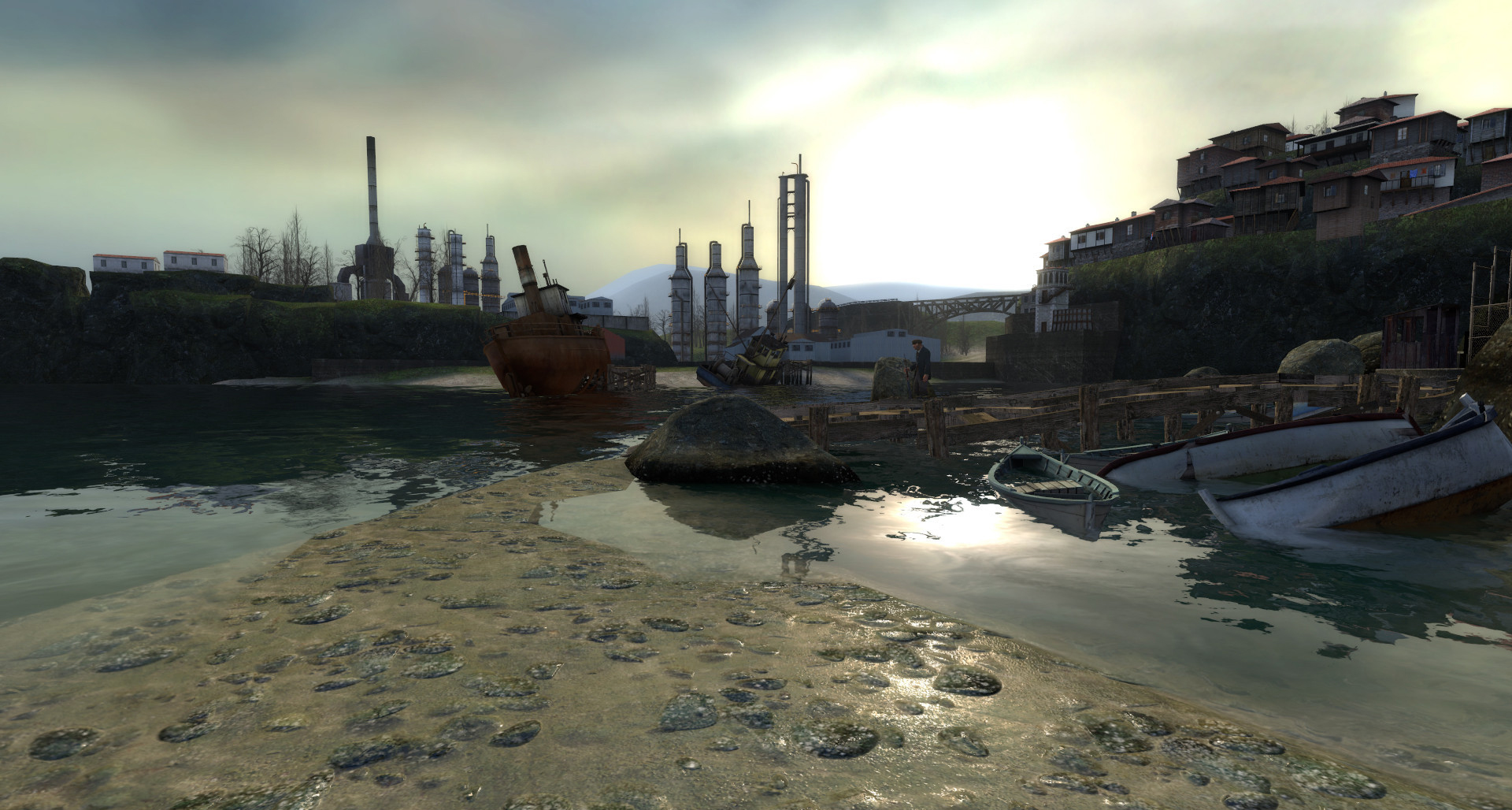
When you start the game, the best move is to get comfortable with the basic controls quickly: movement, shooting, reloading, and using the Gravity Gun. During the first hour, your main goal is to move forward at a steady pace, keep an eye on your health and ammo indicators, and pick up any supplies you come across. It's worth searching each area for ammo crates and med kits, since resources can be scarce. Also, pay attention to dialogue and visual cues in the environment, as they help you understand which way to go and anticipate enemies or traps.
The key systems you need to understand to progress include managing the Gravity Gun, which lets you launch objects to trigger switches or take out enemies from a distance, and using cover, since many fights happen in tight spaces where you need to protect yourself from gunfire. Another important aspect is interacting with the level's elements: doors that open when you activate panels, elevators that require lining up platforms, and devices that must be repaired or powered up. Mastering how these interactions work together makes it easier to move on without getting stuck in locked areas.

Newer players often make mistakes like burning through ammo by firing without control, which forces them to backtrack in search of more supplies. It's also common to underestimate the Gravity Gun and use it only to throw objects, when it can actually be used to disarm bombs or create temporary paths. Another typical error is moving forward without watching enemy movement patterns, which leads to taking unnecessary damage. To avoid these problems, fire selectively, save ammo for the toughest encounters, and always keep your peripheral vision active to spot threats early.
To move forward more efficiently, save your ammo and health for critical fights, using short-range weapons like the pistol or shotgun only when enemies are close. When you find a supply crate, it's useful to check its contents before moving on and store whatever you don't need in your inventory for later. Using the Gravity Gun to move barrels or hit switches from a distance helps you avoid unnecessary exposure. Also, watching the direction of light and HDR effects can point you to hidden areas or alternate routes, since lighting often highlights interactive objects. Finally, saving your progress after clearing important sections helps you avoid replaying long stretches if you make a mistake.

Lost Coast is aimed at players who already know the basic mechanics of Half-Life 2 and want to see a sample of the Source engine's graphical advances without spending much time on it. It also appeals to fans of first-person action games that focus on exploration and light puzzle solving, and to anyone who enjoys sci-fi settings blended with natural environments. If you like the mix of shooting, physics-based object interaction, and a polished visual presentation, this short demo will be a rewarding experience and a good starting point for diving into the Half-Life universe.
Half-Life 2: Lost Coast came out on 27 de octubre de 2005. Platforms, genres and ratings are on the Half-Life 2: Lost Coast game page.
Related games




Last updated: 5 de noviembre de 2026.
Powered by PairProgramming · custom software development, AI and automation.