


Guide
How to play Mini Metro
Where to buy


PC requirements
Can your PC run Mini Metro?
- Minimum RAM:
- 2 GB
- Minimum graphics:
- Shader Model 4.0
- Minimum storage:
- 350 MB
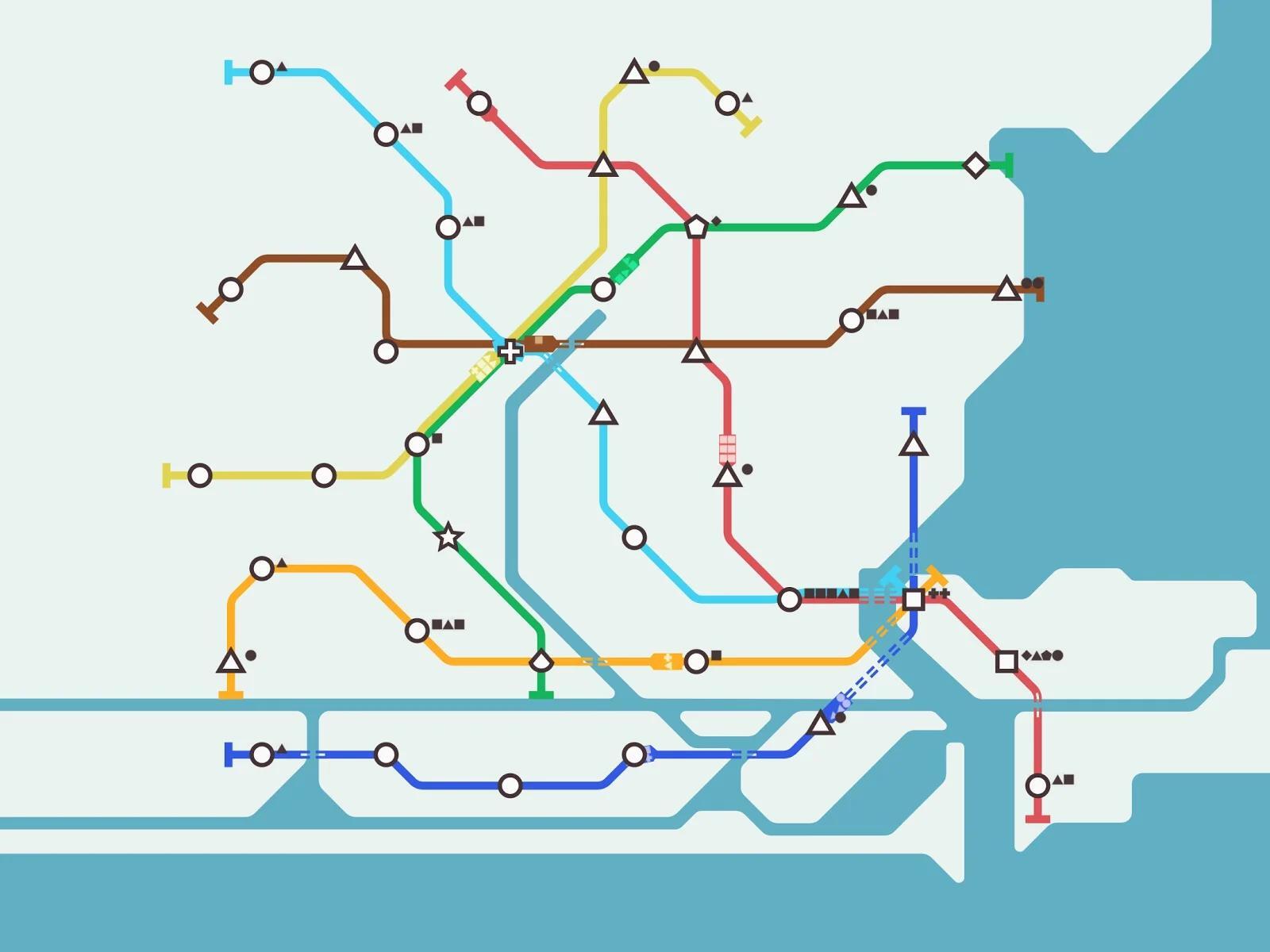
Building an efficient rail network in growing real cities is the challenge of Mini Metro, a logic and strategy indie video game. Its premise is simple, but the execution is brilliant: you connect stations shown as geometric nodes with metro lines while passengers of different shapes travel around the city. What sets it apart is its minimalist approach, with bright colors and a visual style that mimics modern transit maps, paired with generative music that responds to your actions, creating a relaxing experience despite its strategic nature.
The game takes place across levels based on real cities, where you start with three stations that you must link with at least one metro line. In classic mode, your goal is to keep stations from overflowing: each one has a limit on waiting passengers, and if that limit is exceeded, the game ends. Typical runs involve constantly expanding your network, adding new stations and adjusting train routes to keep passengers moving. You can pause the game to plan upgrades, such as extra carriages, tunnels, or bridges, which unlock as in-game days pass. Complexity rises gradually with more stations, more passengers, and obstacles like rivers that require bridges to cross.

At the start, focus on building efficient lines that connect the busiest stations first. Try to keep routes short and direct to minimize travel times. During the first hour, experiment with different network designs, but avoid stretching your lines too far early on, since that can make them harder to manage later. Pay close attention to passenger shapes and how they move between stations, because this is key to planning your connections.
To progress, you need to understand several core systems: managing metro lines, the importance of station types (each geometric shape represents a specific type), and the use of upgrades like extra carriages and tunnels. It's also crucial to learn how to rebuild routes when necessary, especially when new stations appear in strategic spots that require reorganizing your network. Procedural passenger generation means every run is different, so you'll need to keep adapting your strategy.

Common beginner mistakes include extending lines too soon, which makes them hard to manage; ignoring passenger shapes, which causes congestion; and not using the pause to plan adjustments. It's also easy to underestimate upgrades like extra carriages, which can relieve pressure at critical moments. To avoid these problems, take your time planning, watch for patterns in passenger flow, and don't be afraid to rebuild routes when needed.
To get better, aim for circular or figure-eight lines whenever possible, since these designs handle continuous passenger flow more efficiently. Prioritize connecting new stations to existing points in your network to keep everything integrated. Watch for stations that turn into bottlenecks and consider adding more trains or lines that serve those areas specifically. It also helps to keep a few short, specialized lines for particular routes instead of trying to connect everything with long lines.

Mini Metro is designed for players who enjoy minimalist strategy and logic games, those who want a mental challenge without stress, and anyone who appreciates its design and music. Its accessibility and focus on planning make it suitable for both simulation veterans and casual players looking for an uncommon, meditative experience. If you like thinking several steps ahead and finding elegant solutions to complex problems, this game will keep you hooked.
Mini Metro came out on 5 de noviembre de 2015. Platforms, genres and ratings are on the Mini Metro game page.
Related games





Last updated: 6 de noviembre de 2026.
Powered by PairProgramming · custom software development, AI and automation.