
Guide
How to play Monument Valley
Where to buy


PC requirements
Can your PC run Monument Valley?
- Minimum RAM:
- 8 GB
- Minimum graphics:
- GeForce GTX 460
- Minimum storage:
- 1 GB
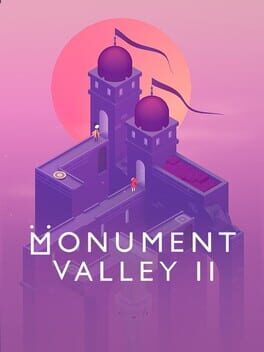
A puzzle game wrapped in a visually stunning package: that's Monument Valley. Set in a world of impossible architecture and sacred geometry, the story follows Princess Ida on her path of redemption through landscapes that defy the laws of perspective and visual logic. What really sets this title apart is its focus on aesthetic beauty and optical illusion, creating scenes that look like they were lifted from an M. C. Escher drawing. The game uses an isometric perspective to present structures that shift and transform as you interact with them, offering a sense of calm and contemplation that's rare in other genres.
Gameplay in Monument Valley is intuitive and accessible, controlled mainly through taps on the screen to interact with the environment. Each play session typically means exploring self-contained levels that present puzzles built on perspective and illusion. The core mechanics revolve around manipulating architecture to create new paths, sliding platforms and rotating structures, and guiding Ida to the exit of each level. In some levels, a totem helps Ida cross gaps. You can't move the camera freely: instead, you turn levers, slide platforms and rotate structures to change the architecture around you. Progress comes from studying each scene closely and figuring out how to interact with its visual elements, with no need for quick reflexes or complex controls.

When you start Monument Valley, take the time to look closely at each scene before interacting with it. During the first hour, you'll likely reach the early levels that introduce the basic perspective manipulation mechanics. Pay attention to color changes and to the silhouettes of the Crow People, which serve as important visual cues. Don't get frustrated if you can't find the solution right away; part of the game's charm lies in the process of visual discovery.
The key systems to understand for progress include working with sacred geometry, which lets you change the perspective of structures to reveal new paths. It's also crucial to understand how the environment's elements connect to each other and how certain actions can alter the entire layout of a level. Watching visual patterns and how they change as you interact with them is essential to keep moving forward without getting stuck.

Common beginner mistakes include trying to solve puzzles too quickly without studying the environment closely. Another common error is overlooking small visual cues such as color changes or the Crow People. To avoid this, take your time exploring every angle and understanding how the elements relate to each other before you try to interact with them.
To get ahead more easily, study each level from different angles by turning the structures and sliding the platforms. Sometimes a change of angle can reveal solutions that weren't obvious at first glance. Also remember that solutions tend to be simpler than they look, so avoid overcomplicating your moves and trust your visual intuition.

Monument Valley appeals to players looking for a relaxing, contemplative experience centered on visual beauty. It will especially attract fans of puzzles built on logic and perspective, as well as those who value art and design above complex mechanical challenges. Its accessibility and focus on aesthetic experience make it a great choice for players of all ages and skill levels, especially those looking for a peaceful escape from daily routine.
Monument Valley came out on 3 de abril de 2014. Platforms, genres and ratings are on the Monument Valley game page.
Related games


Last updated: 9 de noviembre de 2026.
Powered by PairProgramming · custom software development, AI and automation.