


Guide
How to play Persona 4 Golden
Where to buy


PC requirements
Can your PC run Persona 4 Golden?
- Minimum RAM:
- 2 GB
- Minimum graphics:
- Nvidia GeForce GTS 450 | AMD Radeon HD 577
- Minimum storage:
- 14 GB
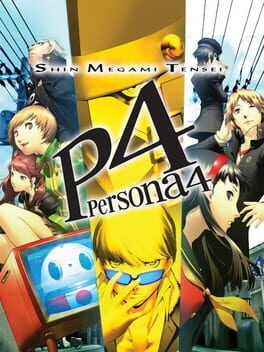
Everyday high school life and the exploration of a mysterious world inside the television come together in Persona 4 Golden, a role-playing game. The story is set in the quiet town of Inaba, a rural area of Japan where a series of murders and disappearances are tied to a strange fog that appears every night. The protagonist, who has just arrived in town to live with his uncle, discovers that he and his friends can enter the Midnight Channel's TV World, an alternate plane that reflects people's repressed desires and fears. What sets this title apart from other RPGs is its strong focus on social interaction: the bonds you form with your classmates, the members of the investigation team and the town's residents directly affect the characters' ability to fight in the dream dimension, creating a mix of life sim and turn-based combat that you won't find in many other games.
The game runs on two main loops. During the day you control the protagonist through a school routine and around town, where you attend class, take part in extracurricular activities, work part-time jobs and talk with the other characters. At night, after midnight, you step into the TV World to explore dungeons generated as towers or labyrinths, fighting Shadows in a turn-based battle system built around the use of Personas, manifestations of the psyche that grant elemental and support skills. A typical session alternates between these two phases, and your progress is measured both by how far you get in solving the mysteries of the case and by the level of your Social Links. Managing your Persona's energy (SP) is essential to keep up the offensive without running dry.

When you start the game, the most important thing is to get familiar with the daily routine and the basic controls. After the opening tutorial, it's a good idea to head to school and talk with the classmates who appear on the first day. These conversations will unlock the first "Social Activities" option, which will help you save time and get items. In the first hour, you should also explore the town map to find the shop and the café, places where you can buy healing items and where you can start your first part-time jobs. Another essential task is to check the calendar on the screen in your room, since it shows the week's events and helps you plan your activities without missing important opportunities.
The key systems that hold the game together are Social Links, time management and Persona fusion. Each bond with a character has several levels. As you raise them, you unlock new skills and strengthen the Personas you can summon in combat. Time is a limited resource: every action uses up a portion of the day, and important events appear only at certain times, so it's essential to balance study, work and exploration. Persona fusion lets you combine two or more entities to create a stronger one. Understanding elemental affinities and enemy weaknesses is vital for choosing the right Persona before you enter the TV World.

Beginners often make mistakes like spending too much time on trivial activities and running out of room to explore the TV World, which delays solving the case. Another common mistake is underestimating how important Social Links are: some players focus only on combat and neglect the conversations, missing the chance to strengthen their Personas and gain exclusive skills. It's also common to run out of SP, which leads to situations where your attacks become ineffective and the fight drags on needlessly. Avoiding these pitfalls means planning your weekly schedule and prioritizing dialogue with characters who show up often.
To move forward more smoothly, it's recommended to follow a routine that combines study, work and socializing in blocks of two or three days, leaving at least one night free to explore the TV World and level up your party members. When you enter the dream dimension, it helps to bring one Persona with healing skills and another with elemental attacks that cover the most common enemy types (fire, ice, electric). When you face a boss, watching its attack pattern lets you prepare better. Also, taking advantage of the "School Events" that appear on the calendar gives you chances to earn extra experience without spending extra time. Finally, saving your progress before every trip into the TV World helps you avoid significant losses if you are defeated.

Persona 4 Golden is made for players who enjoy deep narrative experiences, with well-developed characters and an atmosphere that blends the everyday with the supernatural. It appeals to those who like managing resources, planning schedules and seeing how their social decisions affect their performance in combat. It also appeals to those who appreciate classic RPGs with strategic turns and the chance to customize skills through the fusion of creatures. If you like games that demand both thought and action, and you're willing to invest time in building relationships and exploring a mystery story, you'll find this title rewarding and memorable.
Persona 4 Golden came out on 20 de noviembre de 2012. Platforms, genres and ratings are on the Persona 4 Golden game page.
Related games





Last updated: 24 de noviembre de 2026.
Powered by PairProgramming · custom software development, AI and automation.