Guide
How to play Rivage
Where to buy


PC requirements
Can your PC run Rivage?
- Minimum RAM:
- 16 GB
- Minimum graphics:
- NVIDIA GTX 1070 Ti
- Minimum storage:
- 12 GB
Rivage puts you aboard the A.R.E.S. space station, trapped inside an unknown phenomenon that has left the crew without a trace. The story begins when Miranda, the protagonist, wakes up with no clear memories and has to make her way through the station's corridors, slowly uncovering the cause of the lockdown and the fate of her crewmates. What sets the game apart from other adventure titles is its carefully crafted sci-fi atmosphere combined with puzzles that make you observe your surroundings and connect clues logically, all inside a closed environment that feels alive and heavy with mystery.
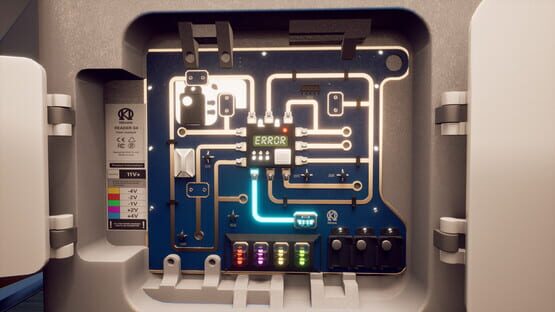
The gameplay is exploration and puzzle solving, and each playthrough unfolds as a series of discovery sessions. You control Miranda in real time, moving through corridors, control rooms and station modules, and interacting with panels, devices and objects that are part of the puzzles. The core mechanics revolve around observing the environment, manipulating interactive elements and combining the information you find to unlock new areas. There is no combat. Progress depends entirely on your ability to decipher the station's systems and follow the story as it unfolds gradually.
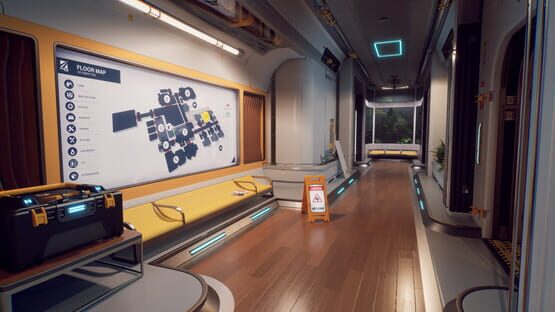
When you start the game, it's best to take a moment to get familiar with the basic movement and interaction controls, which are intuitive and work equally well with keyboard and controller. In the first hour, your priority should be to explore every accessible area, inspect panels and write down any symbol, code or pattern that shows up. The first puzzles are usually designed to teach you how the station's mechanisms work, so solving them without rushing helps you understand the logic the game uses. It's also useful to turn on the objectives log or the game's internal journal to keep track of the clues you find.
To make steady progress, you need to understand three key systems: spatial navigation inside the station, which is based on doors that unlock by solving puzzles; the clue system, where visual and audio elements provide essential information for the puzzles; and knowledge management, meaning the ability to remember and relate data gathered in different areas to unlock new sections. Each of these systems is intertwined, so a clue spotted in one room can be the key to solving a challenge somewhere else on the map.
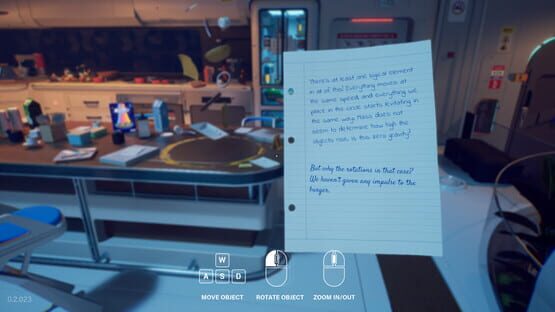
Beginners often make mistakes like moving ahead too fast without recording the details of the environment, which makes it harder to solve puzzles that require combining information from several places. Another common mistake is trying to force solutions without having examined every interaction option, which leads to getting stuck on roadblocks that can be solved with more careful observation. Likewise, ignoring the internal dialogue or the game's log messages deprives you of valuable clues that the game's design places there on purpose.
To improve your pace, it helps to adopt a note-taking method: write down the symbols, codes and relationships that appear, either on paper or by using the game's own notes feature. Using pauses to review your surroundings and go back to areas you've already visited helps you find details that went unnoticed at first. When a puzzle seems unsolvable, trying variations of the interactive elements and watching how the station changes often reveals the underlying logic. Finally, saving often, especially before attempting a risky solution, lets you go back without losing the time you've invested.
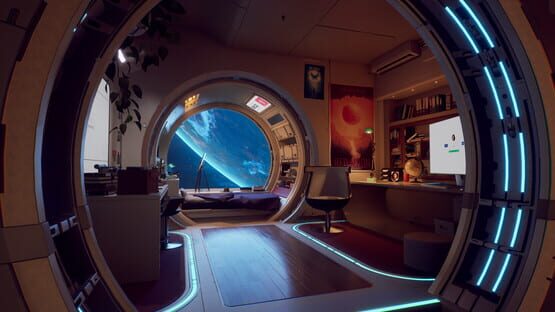
Rivage is made for players who enjoy gripping sci-fi experiences and who prefer the mental challenge of puzzles to fast action. If you appreciate a slow, atmospheric story and the satisfaction of unraveling mysteries through observation and logic, you'll find an appealing option here. It also suits indie game fans who value aesthetic originality and the careful construction of closed worlds, where every detail counts toward moving the story forward.
Rivage came out on 22 de septiembre de 2026. Platforms, genres and ratings are on the Rivage game page.
Related games



Last updated: 23 de noviembre de 2026.
Powered by PairProgramming · custom software development, AI and automation.