Guide
How to play Simon the Sorcerer II: The Lion, the Wizard and the Wardrobe
Where to buy


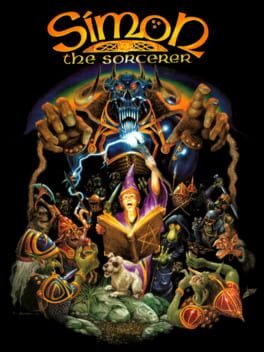
Simon the Sorcerer II: The Lion, the Wizard and the Wardrobe continues the story of the young sorcerer Simon, who gets caught up once again in the schemes of the evil wizard Sordid. The plot starts with a failed experiment by the father of Runt, a boy who wants to be a wizard's apprentice, and who accidentally revives Sordid with a burning spellbook. The villain, now with a robotic body and a rebuilt fortress, sends a magic wardrobe to capture Simon, but the piece of furniture ends up at the door of Calypso, the wizard Simon saved in the previous game. From there, Simon has to find a fuel called mucusade to power the wardrobe and get back to his world, while facing the dangers of the Fortress of Doom. What sets it apart is the mix of British humor, cultural references and a setting that combines medieval castles, steampunk laboratories and fantasy locations, all presented with pixel art graphics and a soundtrack that reinforces the atmosphere of a comic adventure.
The game plays like a classic point-and-click adventure from the 1990s. You control Simon with the cursor, exploring static scenes, picking up items and combining them in your inventory to solve puzzles. A typical session consists of moving from one area to another, talking to characters, reading notes and using items in the right place to move the story forward. The core mechanics include inventory management, item combination, dialogue choices that can open or close options, and logic puzzles that often require you to notice details in the environment. There is no real-time combat; your progress depends on your ability to interpret clues and use logic to unlock new areas.

When you start a new game, the most useful thing is to spend the first hour getting familiar with the interface and exploring the immediate area where Simon wakes up. It's a good idea to examine every visible object, since many of them are part of later puzzles. Saving often is essential, because it lets you go back if an item combination doesn't work. During the first few minutes, you should find the magic wardrobe and the first hint of the mucusade, since these are the elements that drive the plot. Talking to Calypso and any other character who shows up early on usually gives you key clues about where to look for the fuel and which items may come in handy.
To make smooth progress, it's important to understand three key systems: the inventory, item combination and dialogue with characters. The inventory has no limit, so you can pick up everything you find along the way. Some combinations can create new items you can't advance without, so trying different pairs of objects is an essential part of the game. Dialogue also tends to offer information that isn't written anywhere in the environment; paying attention to the answers and to the topics characters bring up helps you work out which items to look for or where to go. Finally, puzzle logic usually relies on the internal consistency of the world: for example, an item that can heat something is probably meant to be used with a source of fire.

Beginners often make mistakes that slow them down. One of the most common is trying to use items in places where they make no sense, which eats up time and leads to frustration. Another frequent mistake is ignoring dialogue or not keeping track of spoken clues, which makes you overlook simple solutions. Some players also save too rarely, which makes it hard to go back when an action turns out to be wrong. Lastly, trying to combine every item without a plan wastes a lot of time.
To avoid these problems, it's best to follow an orderly strategy. First, look carefully at each scene and make a mental note (or write down on paper) of the elements that seem relevant. Second, talk to every available character before trying combinations, since they often point out which items are useful. Third, save before any attempt to combine items or use an important object, so you can step back without losing progress. When you find the mucusade, check whether it needs any preparation before you use it on the wardrobe, since in this kind of adventure fuel often has to be mixed or activated. Going over your whole inventory before each puzzle also makes it easier to find valid combinations. Finally, rereading the descriptions of items and the notes you've found helps you remember clues that may have slipped past you on your first visit.

Simon the Sorcerer II is made for players who enjoy story-driven adventures with clever humor and puzzles that reward observation and logic. If you grew up with the classic point-and-click games of the 1990s and want something that pairs a funny story with mental challenges and no need for quick reflexes, you'll like it. It also appeals to fans of light fantasy who appreciate witty dialogue and cultural references. Anyone who values a well-written plot, reasonable puzzles and a setting rich in detail will enjoy making their way through this second installment of the Simon series.
Simon the Sorcerer II: The Lion, the Wizard and the Wardrobe came out on 1 de enero de 1995. Platforms, genres and ratings are on the Simon the Sorcerer II: The Lion, the Wizard and the Wardrobe game page.
Related games


Last updated: 22 de noviembre de 2026.
Powered by PairProgramming · custom software development, AI and automation.