


Guide
How to play Street Fighter III: New Generation
Released in 1997 for arcade and later for Dreamcast, Street Fighter III: New Generation continues the series after Street Fighter II. The story takes place in the near future, where Gill and the Secret Society threaten the world, but the plot focuses more on introducing an entirely new generation of fighters, with the exception of Ryu and Ken, who remain the pillars of the series. The game stands out for its CP System III hardware, which allows sprites that are more detailed and fluid than those of the previous generation, and for a more polished visual style and vivid colors that mark a clear difference from the Alpha titles. In addition, the presence of characters like Alex, a young American fighter who relies on grapples, and the absence of most of the classic cast, reinforce the idea of a "new generation" and give the game a fresh feel within the Street Fighter universe.
The game mode follows the traditional structure of 2D fighting games: two fighters face off in rounds, and the first to win two out of three takes the match. Each fighter has a set of normal attacks, special moves and Super Arts that are performed with combinations of directions and buttons. One of the central and distinctive mechanics of this title is the parry system, which lets you block an attack without losing health as long as you press the input at the exact moment of impact. This tool, along with the ability to chain combos of normal and special attacks, forces players to pay close attention to timing and to the distance between the characters, creating matches that tend to be fast, technical and heavily dependent on controlling space.

When you start the game, the best approach is to spend the first hour getting familiar with the controls and with at least one character. Pick a fighter who looks appealing to you and whose basic techniques seem approachable; Ryu and Ken are good choices for beginners because their special moves are iconic and relatively easy to perform. Use training mode to practice basic attacks, special moves and, above all, the parry, starting with stationary parry drills before trying to use them while moving. Then take on the CPU at the lowest difficulty to test what you have learned without the pressure of a human opponent, and try to finish a full run to understand the pace of the rounds and how to manage your health bar.
To make steady progress, you need to master three key systems: the parry, spacing (footsies) and the use of Super Arts. Since the parry is a defense with no penalty, it becomes the foundation for counterattacking without losing health. Controlling space lets you decide when to attack and when to back off, so you avoid getting caught inside your opponents' attack range. Finally, the Super Art gauge fills as you deal damage and can be spent on more powerful moves that change the course of a round; knowing when to use a Super Art is as important as knowing when to save it for critical moments. Mastering the combination of these three elements gives you a significant strategic advantage.
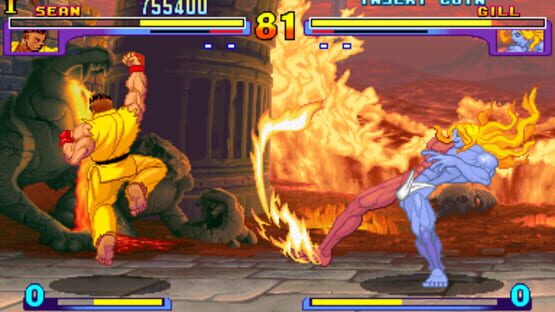
Beginners tend to make mistakes that slow down their learning. One of the most common is relying on traditional blocking, which leaves you vulnerable to Super Arts and long combos. Another typical mistake is throwing out attacks without considering distance, which results in hits that are easily blocked or countered. Many novice players also tend to spam their special moves, underestimating the importance of timing and attack variety. To avoid these problems, it is essential to practice defending with parries, keep a balanced position and alternate between normal and special attacks, always looking to create counterattack opportunities.
Some practical tips for improving quickly include: spending time every day in training mode, focusing first on basic moves and then on more complex combos; recording or watching replays of your own matches to spot patterns in your mistakes; studying rival characters, learning their strengths and weaknesses, which makes it easier to anticipate their actions; and, finally, playing against other players, whether online or in local mode.
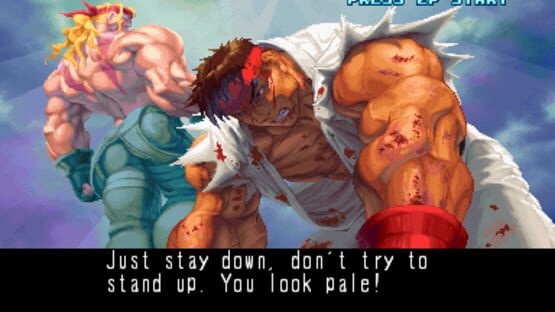
Keeping a structured practice routine speeds up your progress. Start each session with a warm-up of five to ten minutes, repeating your character's basic moves until the timing becomes automatic. Then spend at least twenty minutes working on combos of two or three hits that mix normal attacks, special moves and, once you feel comfortable, a Super Art. It helps to perform the combos slowly at first, marking each step with the game's visual feedback, and only then try them at full speed. Once your combos are solid, move on to parry practice: put the opponent in a neutral position and try to block attacks without losing health, focusing on mid-range hits, which tend to be the most dangerous. Repeating this drill improves your ability to read distance and to respond without relying only on traditional blocking.
Another essential aspect is managing the Super Art gauge. In Street Fighter III, the gauge fills gradually and lets you perform higher-damage moves or special effects. Learn to check how much you have built up before launching a powerful attack; using a Super Art too early can leave you vulnerable, while saving it for the moment when the opponent is committed to an attack of their own is usually much more effective. Practice pairing a simple combo that ends in a Super Art, so the pressure you create is constant and hard to counter.
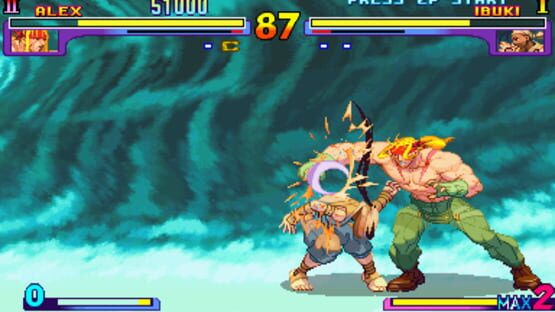
Character selection also affects the learning curve. Although the game introduced a new generation of fighters, Ryu and Ken remain safe choices for beginners because their movesets are more straightforward and their special moves are easy to perform. Trying several characters in training mode helps you identify which one fits your style best, whether you prefer fast, short-range attacks or more powerful, longer-range hits. Once you find your favorite, focus your effort on perfecting their game instead of splitting your time among many different fighters.
Taking part in local tournaments or on online platforms, even if it feels intimidating at first, gives you valuable exposure to different playstyles. Every match against a human reveals behavior patterns that do not show up against the AI, such as a tendency to use certain combos or to try mix-ups with aerial attacks. Briefly write down the results of each match: which moves surprised you, which mistakes you repeated and which tactics worked. Over time, that log becomes a personal guide that speeds up your decision-making during a fight.
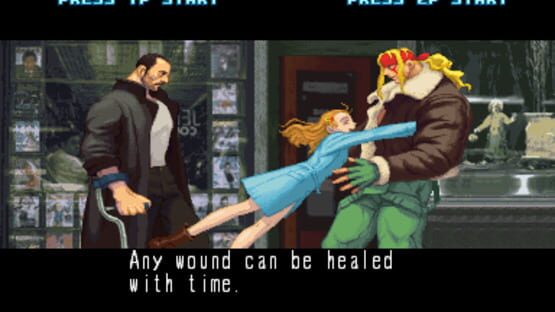
As for the type of player who will find the most satisfaction in Street Fighter III: the experience is designed for those who enjoy a more technical and strategic pace of combat than in earlier entries. Fans of fighting games who value precise timing, the depth of the parry defense system and the reward for smart Super Art gauge management will be drawn to what it offers. It also suits players who appreciate detailed graphics and the aesthetic of the nineties, as well as those looking for a challenge that evolves with practice and an active community in both classic arcades and modern consoles. If you prefer fast action without much thought, other titles in the series may suit you better; but if you get excited about polishing every move and discovering advanced combinations, Street Fighter III: New Generation offers a rewarding and lasting experience.
Street Fighter III: New Generation came out on 28 de febrero de 1997. Platforms, genres and ratings are on the Street Fighter III: New Generation game page.
Related games


Last updated: 24 de noviembre de 2026.
Powered by PairProgramming · custom software development, AI and automation.