


Guide
How to play The Simpsons: Bart's Nightmare
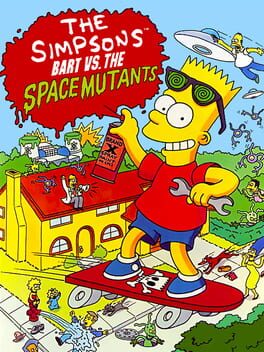
In The Simpsons: Bart's Nightmare, Bart Simpson falls asleep while doing his homework, and the assignment scatters into his dreams. He wanders a bizarre dream street to retrieve its pages through different nightmare challenges. It came out on Super Nintendo in 1992 in North America, developed by Sculptured Software and published by Acclaim Entertainment. What sets it apart is that it is a collection of arcade platform minigames in several styles, so each nightmare follows different rules and the perspective changes from one to the next. It is not a standard platformer from start to finish.
A session is built around the dream street, which works as a hub. You explore it, locate the loose homework pages, choose dream doors and complete the themed challenge behind each one to recover pages. The arcade action varies by nightmare: some are platform-style stages, others play very differently, and Bart gets stage-specific transformations along the way. You play alone, since there is no co-op and no versus mode, and no online connection is needed. Lives are the resource you have to manage in each challenge.

In your first hour, spend your time on the street before rushing into the dreams. Search it for a homework sheet before trying to enter a dream minigame, then step through a door and learn how that nightmare works. Expect to relearn the controls and the goal each time, because the rules are not the same in every dream. One of the places you will see is Windy World. Use the first few attempts to understand what each challenge asks of you, and keep an eye on your lives.
The key systems are few. The homework pages are the heart of the game: recovering them is how you move forward, and you do it by finishing minigames, not by building up equipment. The dream street hub ties everything together, the different nightmare minigames are the challenges, and the transformations change what Bart can do in a given stage. Lives limit how many mistakes you can make. There is no leveling, no skill points and no saved equipment progression, so improvement comes from your own understanding of each nightmare.

Beginners often assume the game is a single platformer and try to apply the same habits everywhere, which costs lives. Another common mistake is heading into a dream without a homework sheet in hand, instead of searching the street first. Some players also expect a sports tournament structure or an upgrade system with new attacks and powerups, but the game has neither. Its story is about finding loose pages in a surreal street, and progress comes from retrieving those pages across distinct nightmares.
As a concrete tip, search the street for a homework sheet before trying to enter a dream minigame. Once inside a nightmare, take a moment to work out its rules and what the transformation, if any, lets you do. Treat your lives as a resource and do not waste them while you are still learning a new challenge. Five themed dream types are not all standard platform levels, so do not expect any one of them to teach you the rest.

The game suits players who like short arcade challenges in different styles and enjoy Bart's strange dream setting. It is a good fit if you want a single-player Super Nintendo game from 1992 that changes its rules from one nightmare to the next, and fans of The Simpsons will recognize Bart right away. It is less suited to anyone looking for a long, level-based platformer, multiplayer or a progression system with upgrades.
The Simpsons: Bart's Nightmare came out on 12 de octubre de 1992. Platforms, genres and ratings are on the The Simpsons: Bart's Nightmare game page.
Related games




Last updated: 23 de noviembre de 2026.
Powered by PairProgramming · custom software development, AI and automation.