Guide
How to play Ultima
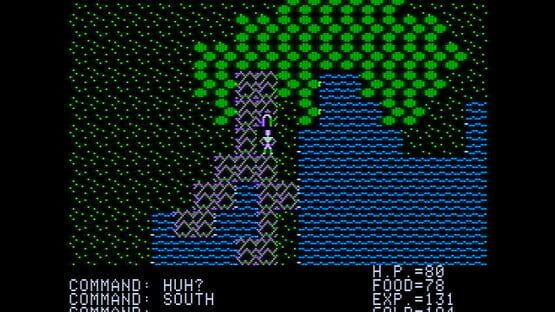
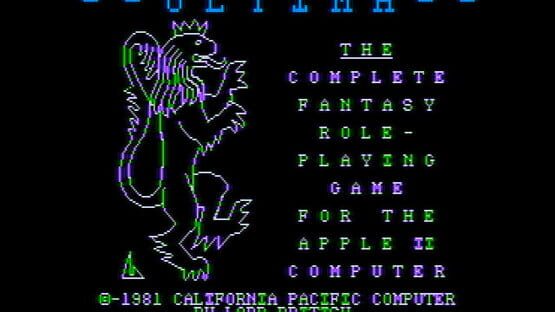
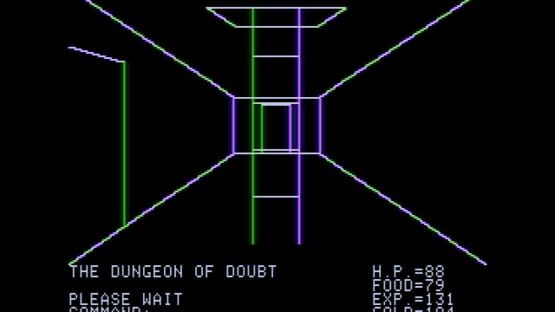
Ultima came out in June 1981 for the Apple II, made by Richard Garriott and published by the California Pacific Computer Company. You play the Stranger, who travels through Sosaria looking for a time machine to stop the evil wizard Mondain before he becomes invincible. What sets it apart is that it mixes two views: an overhead map for the overworld, towns and fields, and first-person dungeons you explore on foot. It also throws in vehicles and a surprise space shuttle combat sequence. It is a single-player game with no co-op or PvP, and it does not need an online connection.
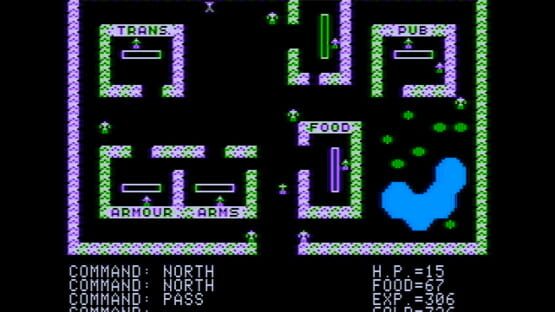
A typical session has you moving across a tile-based map, visiting towns and fields, and talking to rulers who hand out quests. Out in the world, combat is turn-based and tied to exploration. When you enter a dungeon, the view switches to first person and you fight the creatures inside. The core loop is simple: explore, fight, collect money and gear, and fulfill quests for rulers. The space shuttle part is different from the rest, because it is a real-time spacecraft sequence instead of turn-based fighting.
In your first hour, get comfortable with the overhead map and walk around the towns and fields near where you start. Talk to the rulers to pick up quests, and watch your coins and your food, since those are the resources you manage. Take a look at your character attributes, because improving them is how you grow stronger. Short trips into the first-person dungeons are a good way to learn how fighting creatures works and to earn money and gear. The exact controls of the original 1981 edition are not covered here, so check the manual or the version you are playing.
The key systems are character attributes, equipment, vehicles, and the time machine quest. You improve your attributes and your gear over time, and you also need to acquire four gems and other requisites before you can reach Mondain. Vehicles help you get around Sosaria, and the space shuttle shows up as its own combat sequence. Coins and food are your main resources, so keep an eye on both while you explore.
Common beginner mistakes include rushing into dungeons without improving your attributes or gear, ignoring the quests that rulers give you, and forgetting that the goal is the time machine and the requisites needed to face Mondain. Another one is expecting a modern menu-based RPG with potions, bosses, and portable save codes. The original 1981 game is nothing like that: it is built around the overhead map, dungeon exploration, and attribute advancement.
Some concrete tips: fulfill quests for rulers to earn money and gear, spend your coins on equipment, and use the dungeons to fight creatures and build up your character. Keep track of the requisites you still need, including the four gems, so you know what stands between you and Mondain. Do not be thrown off when the space shuttle combat appears, since it is a real-time sequence and works differently from the rest of the game.
Ultima is for you if you like old-school role-playing games, tile-based exploration, and first-person dungeon crawling, and want to see where the genre started. It suits players who are fine with a single-player game and a simple loop of exploring, fighting, and questing. Keep in mind that this is the 1981 original, not the graphically revised 1986 Ultima I: The First Age of Darkness.
Ultima came out on 1 de junio de 1981. Platforms, genres and ratings are on the Ultima game page.
Related games




Last updated: 23 de noviembre de 2026.
Powered by PairProgramming · custom software development, AI and automation.