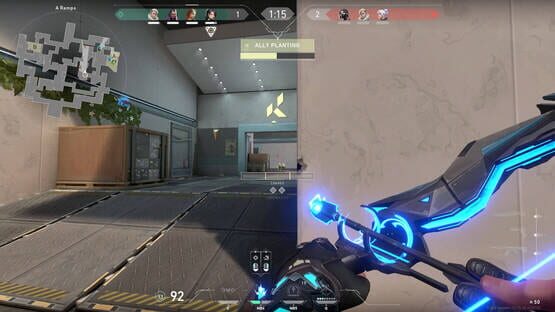
Guide
How to play Valorant
Where to buy


A tactical shooter where two teams of five players face off in alternating rounds of attack and defense: that's Valorant. The setting mixes urban and futuristic locations from different parts of the world, which gives it an international, varied feel. What sets it apart from other games in the genre is that each player controls an "agent" with their own abilities, on top of shooting accuracy, so you have to combine good aim with the strategy of each character's unique powers.
The game is played in rounds. The attacking team has to plant and detonate a bomb (known as the "spike") at one of several designated sites, while the defenders have to stop them or defuse it if it has already been planted. Each round starts with a buy phase in which players spend the money they've earned to get weapons, gear and abilities. The core mechanics include managing the "economy" (money), using abilities that can block vision, heal or create barriers, and precise shooting with controlled recoil. The game rewards coordination, shared information and quick decision-making.
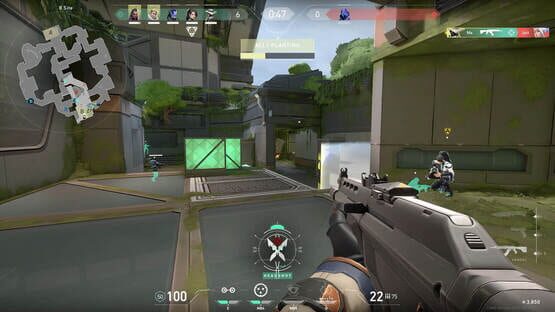
When you first start playing, the best thing to do is spend the first hour getting familiar with the controls and the interface. Complete the basic tutorial, which teaches you how to move, aim and use a simple ability, and then try the practice mode to experiment with different weapons and agents without the pressure of a competitive match. It helps to adjust your mouse or controller sensitivity, set up hotkeys for your abilities and try several agents to figure out which one feels most natural. During that first session, it's also worth paying attention to the game's prompts about the economy and buy time.
To make progress, you need to understand several systems that the game runs in every match. The "economy" determines how many resources each player has to buy weapons and abilities, and it depends on your performance in previous rounds (wins, losses, kills). Each agent has a set of abilities whose charges you buy with money, except for the signature ability, which is included at the start of every round, and an ultimate ability that charges through kills or orbs. The map is divided into zones with lines of sight and critical angles, so knowing the "callouts" (names of areas) helps you communicate effectively with your team. Managing the timing of planting and defusing the spike is also crucial for deciding when to push or fall back.
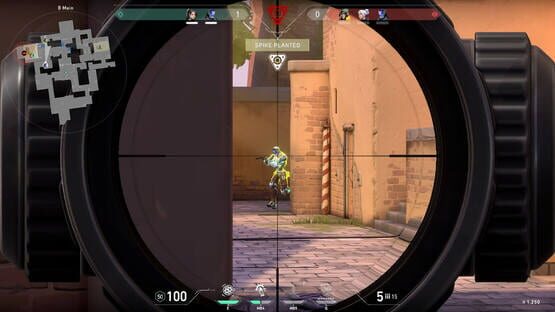
The typical mistakes beginners make usually come down to a lack of communication and poor economy management. Many players spend all their money every round, which leaves the team without resources for later rounds. Others rush into open areas alone, without cover or coordination, which results in quick deaths and lost information. Avoiding these mistakes means talking with your team, planning your weapon and ability purchases in a balanced way, and using abilities tactically, not just as simple attack "spells."
To improve more efficiently, it's a good idea to practice your aim in training mode, focusing on each weapon's recoil patterns and adjusting your sensitivity until you find one that allows smooth, precise movements. Playing several matches without pressure in "unrated" mode helps you experiment with different agents and understand the flow of each map. Keeping your communication clear, using short, specific phrases, improves team coordination. It's also useful to watch experienced players, either in live streams or in videos, to learn positioning, ability usage and economy management. Finally, setting small goals, like improving your kills per match or learning to use an ultimate ability decisively, keeps you motivated and your progress steady.
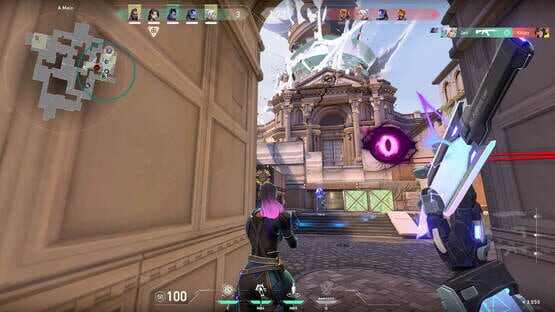
Valorant is made for players who enjoy tactical shooters where shooting accuracy is combined with a strategic layer of abilities and teamwork. It fits those who value planning, communication and continuous improvement, and who are willing to invest time in learning the nuances of each agent and map. Those who prefer fast-paced games without the need for deep coordination may find it less appealing, while fans of competition, situational analysis and executing coordinated plays will find Valorant a rewarding and challenging game.
Valorant came out on 2 de junio de 2020. Platforms, genres and ratings are on the Valorant game page.
Related games



Last updated: 24 de noviembre de 2026.
Powered by PairProgramming · custom software development, AI and automation.